According to NCCA (National Commission for Culture and the Arts) and CCP (Cultural Center of the Philippines), these are the respective National Artists for Literature in our country:
- Francisco Arcellana
- Edith L. Tiempo
- Bienvenido Lumbera
- N.V.M. Gonzalez
- Virgilio S. Almario
- Cirilo F. Bautista
- Nick Joaquin
- Amado V. Hernandez
- Lazaro Francisco
- F. Sionil Jose
- Carlos P. Romulo
- Jose Garcia Villa
- Alejandro Roces
- Rolando S. Tinio
- Levi Celerio
- Resil B. Mojares
- Ramon L. Muzones
Francisco Arcellana

Arcellana's published books include:
- Selected Stories (1963)
- Poetry and Politics: The State of Original Writing in English in the Philippines Today (1979)
- The Francisco Arcellana Sampler (1991).
Edith L. Tiempo

Tiempo's works include:
Novels
- A Blade of Fern (1978)
- His Native Coast (1979)
- The Alien Corn (1992)
- One, Tilting Leaves (1995)
- The Builder (2004)
- The Jumong (2006)
Short story collections
- Abide, Joshua, and Other Stories (1964)
Poetry collections
- The Tracks of Babylon and Other Poems (1966)
- The Charmer's Box and Other Poet (1993)
- Marginal Annotations and Other Poems
- Commend Contend. Beyond Extensions (2010)
Bienvenido Lumbera
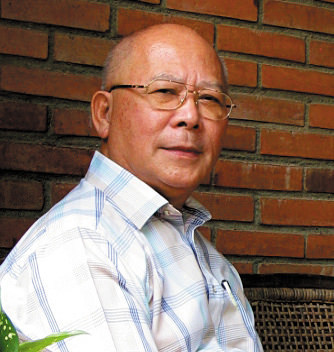
Bienvenido L. Lumbera is a Filipino poet, critic and dramatist. He is a National Artist of the Philippines and a recipient of the Ramon Magsaysay Award for Journalism, Literature and Creative Communications. He won numerous literary awards, including the National Book Awards from the National Book Foundation, and the Carlos Palanca Memorial Awards.
Lumbera received his Litt.B. and M.A. degrees from the University of Santo Tomas in 1950, and then his Ph.D. in Comparative Literature from Indiana University in 1968.
Lumbera's works include:
Poetry
- Ka Bel
- The Yaya’s Lullaby
- Servant
- Sadness
- Eulogy of Roaches
- 'Jamborzkie Light
Literary criticism
- Revaluation: Essays on Literature, Cinema, and Popular Culture, 1984
- Tagalog Poetry, 1570-1898: Tradition and Influences on Its Development, 1986
- Abot-Tanaw: Sulyap at Suri sa Nagbabagong Kultura at Lipunan, 1987
Textbooks
- Pedagogy
- Philippine Literature: A History and Anthology
N.V.M. Gonzalez

According to Brainard, Néstor Vicente Madali González was a Filipino novelist, short story writer, essayist and, poet. Conferred as the National Artist of the Philippines for Literature in 1997. He was born on 8 September 1915 in Romblon, Philippines. González, however, was raised in Mansalay, a southern town of the Philippine province of Oriental Mindoro. González was a son of a school supervisor and a teacher. As a teenager, he helped his father by delivering meat door-to-door across provincial villages and municipalities. González was also a musician. He played the violin and even made four guitars by hand. He earned his first peso by playing the violin during a Chinese funeral in Romblon. González attended Mindoro High School (now Jose J. Leido Jr. Memorial National High School) from 1927 to 1930. González attended college at National University (Manila) but he was unable to finish his undergraduate degree. While in Manila, González wrote for the Philippine Graphic and later edited for the Evening News Magazine and Manila Chronicle. His first published essay appeared in the Philippine Graphic and his first poem in Poetry in 1934. González made his mark in the Philippine writing community as a member of the Board of Advisers of Likhaan: the University of the Philippines Creative Writing Center, founding editor of The Diliman Review and as the first president of the Philippine Writers' Association.
González attended creative writing classes under Wallace Stegner and Katherine Anne Porterat Stanford University. In 1950, González returned to the Philippines and taught at the University of Santo Tomas, the Philippine Women's University and the University of the Philippines (U.P.). At U.P., González was only one of two faculty members accepted to teach in the university without holding a degree. On the basis of his literary publications and distinctions, González later taught at the University of California, Santa Barbara, California State University, Hayward, the University of Washington, the University of California, Los Angeles, and the University of California, Berkeley.
On 14 April 1987, the University of the Philippines conferred on N.V.M. González the degree of Doctor of Humane Letters, honoris causa, "For his creative genius in shaping the Philippine short story and novel, and making a new clearing within the English idiom and tradition on which he established an authentic vocabulary, ...For his insightful criticism by which he advanced the literary tradition of the Filipino and enriched the vocation for all writers of the present generation...For his visions and auguries by which he gave the Filipino sense and sensibility a profound and unmistakable script read and reread throughout the international community of letters..."
N.V.M. González was proclaimed National Artist of the Philippines in 1997. He died on 28 November 1999 at the age of 84. As a National Artist, Gonzalez was honored with a state funeral at the Libingan ng mga Bayani.
N.V.M.G.’s works include:
(The works of Gonzalez have been published in Filipino, English, Chinese, German, Russian and Indonesian.)
Novels
- The Winds of April (1941)
- A Season of Grace (1956)
- The Bamboo Dancers (1988)
- The Land And The Rain
- The Happiest Boy in The World
- Bread of Salt
Short fiction
- "The Tomato Game".1992
- A Grammar of Dreams and Other Stories. University of the Philippines Press, 1997
- The Bread of Salt and Other Stories. Seattle: University of Washington Press, 1993; University of the Philippines Press, 1993
- Mindoro and Beyond: Twenty-one Stories. Quezon City: University of the Philippines Press, 1981; New Day, 1989
- Selected Stories. Denver, Colorado: Alan Swallow, 1964
- Look, Stranger, on this Island Now. Manila: Benipayo, 1963
- Children of the Ash-Covered Loam and Other Stories. Manila: Benipayo, 1954; Bookmark Filipino Literary Classic, 1992
- Seven Hills Away. Denver, Colorado: Alan Swallow, 1947
Essays
- A Novel of Justice: Selected Essays 1968–1994. Manila: National Commission for Culture and the Arts and Anvil (popular edition), 1996
- Work on the Mountain (Includes The Father and the Maid, Essays on Filipino Life and Letters and Kalutang: A Filipino in the World), University of the Philippines Press, 1996
Virgilio S. Almario

According to the UP Newsletter and the Manila Bulletin, Virgilio Senadrin Almario (born March 9, 1944), better known by his pen name Rio Alma, is a Filipino artist, author, poet, critic, translator, editor, teacher, and cultural manager. He is a National Artist of the Philippines and currently serves as the chairman of the Komisyon sa Wikang Filipino (KWF), the government agency mandated to promote and standardize the use of the Filipino language. On January 5, 2017, Almario was also elected as the chairman of the National Commission for Culture and the Arts (NCCA).
According to Press Reader, Growing up in Bulacan among peasants, Almario sought his education at the City of Manila and completed his degree in A.B. Political Science at the University of the Philippines Diliman. His life as a poet started when he took master's units in education at the University of the East where he became associated with Rogelio G. Mangahas and Lamberto E. Antonio. He did not finish the program. He only took his M.A. in Filipino in 1974 at the University of the Philippines Diliman.
According to NBDB, aside from being a critic, Almario engaged in translating and editing. He has translated the best contemporary poets of the world. He has also translated for theater production the plays of Nick Joaquin, Bertolt Brecht, Euripides and Maxim Gorki. Other important translations include the famous works of the Philippines' national hero, José Rizal, namely Noli Me Tangere and El filibusterismo. For these two, he was awarded the 1999 award for translation by the Manila Critics Circle.
According to Almario's official biography, Almario has been a recipient of numerous awards such as several Palanca Awards, two grand prizes from the Cultural Center of the Philippines, the Makata ng Taon of the Komisyon sa Wikang Filipino, the TOYM for literature, and the Southeast Asia Write Award of Bangkok.
He was an instructor at the Lagao Central Elementary School from 1969–1972. In 2003, he was appointed Dean of the College of Arts and Letters at the University of the Philippines DIliman. On June 25 of the same year, he was proclaimed National Artist for Literature.
Almario is also the founder and workshop director of the Linangan sa Imahen, Retorika, at Anyo (LIRA), an organization of poets who write in Filipino. Award-winning writers and poets such as Roberto and Rebecca Añonuevo, Romulo Baquiran Jr., Michael Coroza, Jerry Gracio, and Vim Nadera are but some of the products of the LIRA workshop.
He was a founding member of the Gallan sa Arte at Tula (GAT), along with fellow poets Teo Antonio nd Mike Bigornia.
Almario's works include:
Poetry Collections
- Palipad-Hangin. (1985)
- Katon Para sa Limang Pandama. (1987)
- Sentimental. (2004)
- Estremelenggoles. (2004)
- Memo Mulang Gimokudan. (2005)
- Dust Devils. (2005)
- Sonetos Postumos, book of poems with translation by Marne Kilates and paintings by National Artist Ang Kiukok. (2006)
- Tatlong Pasyon sa Ating Panahon, poems for children with illustrations by Mark Justiniani, Neil Doloricon, Ferdinand Doctolero. (2006)
- Buwan, Buwang, Bulawan. (2009)
- UP Diksyunaryong Filipino
- Kulo at Kolorum
Cirilo F. Bautista

Cirilo Bautista was a Filipino poet, critic and writer of nonfiction. A National Artist of the Philippines award was conferred on him in 2014.
According to De Vera from Philippine Daily Inquirer, Bautista was born in Manila on July 9, 1941 and spent his childhood in Balic-Balic, Sampaloc. Cirilo Bautista was married to Rosemarie Bautista and had three children.
He received his basic education from Legarda Elementary School (1st Honorable Mention, 1954) and Victorino Mapa High School (Valedictorian, 1959). He received his degrees in AB Literature from the University of Santo Tomas (magna cum laude, 1963), MA Literature from St. Louis University, Baguio (magna cum laude, 1968), and Doctor of Arts in Language and Literature from De La Salle University-Manila (1990). He received a fellowship to attend the International Writing Program at the University of Iowa (1968–1969).
Bautista taught creative writing and literature at St. Louis University (1963–1968) and the University of Santo Tomas (1969–1970) before moving to De La Salle University-Manila in 1970. He is also a co-founding member of the Philippine Literary Arts Council (PLAC) and a member of the Manila Critics Circle, Philippine Center of International PEN and the Philippine Writers Academy.
Bautista has also received Carlos Palanca Memorial Awards (for poetry, fiction and essay in English and Filipino) as well as Philippines Free Press Awards for Fiction, Manila Critics' Circle National Book Awards, Gawad Balagtas from the Unyon ng mga Manunulat ng Pilipinas, the Pablo Roman Prize for the Novel, and the highest accolades from the City of Manila, Quezon City and Iligan City. Bautista was hailed in 1993 as Makata ng Taon by the Komisyon ng mga Wika ng Pilipinas for winning the poetry contest sponsored by the government. The last part of his epic trilogy The Trilogy of Saint Lazarus, entitled Sunlight on Broken Stones, won the Centennial Prize for the epic in 1998. He was an exchange professor in Waseda University and Ohio University. He became an Honorary Fellow in Creative Writing at the University of Iowa in 1969, and was the first recipient of a British Council fellowship as a creative writer at Trinity College, Cambridge in 1987.
Bautista works include Boneyard Breaking, Sugat ng Salita, The Archipelago, Telex Moon, Summer Suns, Charts, The Cave and Other Poems, Kirot ng Kataga, and Bullets and Roses: The Poetry of Amado V. Hernandez. His novel Galaw ng Asoge was published by the University of Santo Tomas Press in 2004. His latest book, Believe and Betray: New and Collected Poems, appeared in 2006, published by De La Salle University Press.
His poems have appeared in major literary journals, papers, and magazines in the Philippines and in anthologies published in the United States, Japan, the Netherlands, China, Romania, Hong Kong, Germany and Malaysia. These include: excerpts from Sunlight on Broken Stones, published in World Literature Today, USA, Spring 2000; What Rizal Told Me (poem), published in Manoa, University of Hawaii, 1997; She of the Quick Hands: My Daughter and The Seagull (poems), published in English Teacher’s Portfolio of Multicultural Activities, edited by John Cowen (New York: Simon & Schuster, 1996).
Aside from his teaching, creative and research activities as a Professor Emeritus of Literature at the College of Liberal Arts, De La Salle University-Manila, Bautista was also a columnist and literary editor of the Philippine Panorama, the Sunday Supplement of the Manila Bulletin. He was also a member of the Board of Advisers and Associate, Bienvenido Santos Creative Writing Center of De La Salle University-Manila and Senior Associate, The Center for Creative Writing and Studies of the University of Santo Tomas.
According to The Manila Times and CNN Philippines, Bautista died on May 6, 2018. He was laid to rest following a state funeral at the Libingan ng mga Bayani.
Bautista’s works include:
Poetry
- Summer suns (with Albert Casuga, 1963)
- The Cave and Other Poems (1968)
- The Archipelago (1970)
- Charts (1973)
- Telex Moon (1981)
- Sugat ng Salita (1985)
- Kirot Ng Kataga (1995),
- Sunlight On Broken Stones (2000)
- Tinik Sa Dila: Isang Katipunan Ng Mga Tula (2003)
- The Trilogy Of Saint Lazarus (2001)
- Believe and Betray: New and Collected Poems (2007)
- Third World Geography
- Pedagogic (2008)
Fiction
- Stories (1990)
- Galaw ng Asoge (2004)
Literary Theory and Cultural Studies
- Breaking Signs (1990)
- Words And Battlefields: A Theoria On The Poem (1998)
- The Estrella D. Alfon Anthology Vol. I – Short Stories (2000)
- Bullets And Roses: The Poetry Of Amado V. Hernandez / A Bilingual Edition (translated Into English And With A Critical Introduction) (2002)
Nick Joaquin
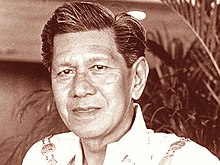
According to Yaptenco and Busuego, Nicomedes "Nick" Márquez Joaquín (May 4, 1917 – April 29, 2004) was a Filipino writer and journalist best known for his short stories and novels in the English language. He also wrote using the pen name Quijano de Manila. Joaquín was conferred the rank and title of National Artist of the Philippines for Literature. He has been considered one of the most important Filipino writers, along with José Rizal and Claro M. Recto. Unlike Rizal and Recto, whose works were written in Spanish, Joaquin's major works were written in English despite being a native Spanish speaker.
Before becoming one of the leading practitioners of Philippine literature in English, he was a seminarian in Hong Kong – who later realized that he could better serve God and humanity by being a writer. This is reflected in the content and style of his works, as he emphasizes the need to restore national consciousness through important elements in Catholic Spanish Heritage. In his self-confessed mission as a writer, he is a sort of "cultural apostle", whose purpose is to revive interest in Philippine national life through literature – and provide the necessary drive and inspiration for a fuller comprehension of their cultural background. His awareness of the significance of the past to the present is part of a concerted effort to preserve the spiritual tradition and the orthodox faith of the Catholic past – which he perceives as the only solution to our modern ills.
Joaquin’s works include:
Bibliography
- May Day Eve (1947)
- Prose and Poems (1952)
- The House On Zapote Street (1960)
- The Woman Who had Two Navels (1961)
- La Naval de Manila and Other Essays (1964)
- A Portrait of the Artist as Filipino (1966)
- Tropical Gothic (1972)
- A Question of Heroes (1977)
- Joseph Estrada and Other Sketches (1977)
- Nora Aunor & Other Profiles (1977)
- Ronnie Poe & Other Silhouettes (1977)
- Reportage on Lovers (1977)
- Reportage on Crime (1977)
- Amalia Fuentes & Other Etchings (1977)
- Gloria Diaz & Other Delineations (1977)
- Doveglion & Other Cameos (1977)
- Language of the Streets and Other Essays (1977)
- Manila: Sin City and Other Chronicles (1977)
- Pop Stories for Groovy Kids (1979)
- Reportage on the Marcoses (1979)
- Language of the Street and Other Essays (1980)
- The Ballad of the Five Battles (1981)
- Reportage on Politics (1981)
- Tropical Baroque (1982)
- The Aquinos of Tarlac: An Essay on History as Three Generations (1983)
- Almanac for Manileños
- Cave and Shadows (1983)
- The Quartet of the Tiger Moon: Scenes from the People Power Apocalypse (1986)
- Collected Verse (1987)
- Culture and History: Occasional Notes on the Process of Philippine Becoming (1988)
- Intramuros (1988) (Editor)
- Manila, My Manila: A History for the Young (1990)
- Mr. Rural Reform: The Times and Tidings of Manny Manahan (1990)
- The D.M. Guevara Story (1993)
- Mr. F.E.U., the Culture Hero That Was Nicanor Reyes (1995)
- Rizal in Saga (1996)
- ABE: A Frank Sketch of E. Aguilar Cruz (2004)
Filmography
- Siglo Filipino : Odyssey of a Nation (2001)
Amando V. Hernandez

Amado Vera Hernandez, commonly known as Amado V. Hernandez (September 13, 1903 – March 24, 1970), was a Filipino writer and labor leader who was known for his criticism of social injustices in the Philippines and was later imprisoned for his involvement in the communist movement. He was the central figure in a landmark legal case that took 13 years to settle. He was born in Tondo, Manila, to parents from Hagonoy, Bulacan. He grew up and studied at the Gagalangin, Tondo, the Manila High School and at the American Correspondence School.
Hernandez’s works include:
Novels
His socio-political novels were based on his experiences as a guerrilla, as a labour leader and as a political detainee.
- Mga Ibong Mandaragit (Birds of Prey),1969.
- Luha Ng Buwaya (Crocodile's Tears), 1972.
- Pili sa Pinili (Chosen from the Selected), 1964.
Poems
- Isang Dipang Langit
- Panata sa Kalayaan
- Ang Mga Kayamanan ng Tao
- Ang Dalaw Kay Silaw
- Bartolina
- Kung Tuyo Na ang Luha Mo Aking Bayan
- Bayang Malaya
- Ang Taong Kapos
- Bayani
- Sa Batang Walang Bagong Damit
- Isang Sining ng Pagbigkas
- Ang Panday
- Inang Wika
- Ang Tao
- Pamana
- Ang Aklasan
Essays
- Si Atang at ang Dulaan (Atang and the Theater)
- Si Jose Corazon de Jesus at ang Ating Panulaan (Jose Corazon de Jesus and Our Poetry)
Lazaro Francisco

Lázaro Francisco y Angeles, also known as Lazaro A. Francisco (February 22, 1898 – June 17, 1980) was a Filipino novelist, essayist and playwright according to Philstar.com (https://www.philstar.com/headlines/2009/08/05/492914/national-artist-selection-scored). Francisco was posthumously named a National Artist of the Philippines for Literature in 2009.
According to varsitarian.net (http://varsitarian.net/filipino/20090830/idealistang_nangarap_ng_magandang_daigdig), The Manila Times (https://www.pressreader.com/philippines/manila-times/20090818/281771330209625 and http://www.manilatimes.net/read-works-national-artist-francisco-kwf/382379/), Lazaro’s official website (http://www.lazarofrancisco.com/works.html), and Research Inquirer (http://newsinfo.inquirer.net/970439/did-you-know-120th-birth-anniversary-of-lazaro-francisco).
Francisco was born on February 22, 1898 to Eulogio Francisco and Clara Angeles, in Orani, Bataan. He spent his childhood years in Cabanatuan, Nueva Ecija. He took his college education at the Central Luzon Agricultural College (now Central Luzon State University), but was not able to finish due to poverty. He became a messenger of the Provincial Treasurer's Office of Nueva Ecija. Later on, he took third degree civil service examination where he qualified to become an assessor of the provincial government of Nueva Ecija.
He started writing in 1925, with five of his novels took him to fame. Being an assessor in an agricultural province, most of his writings were focused on small farmers and their current conditions with foreign businessmen. This lead him to win separate awards from Commonwealth Literary Contest in 1940 and 1946, for his masterpieces, Singsing na Pangkasal and Tatsulok, respectively.
In 1958, he established the Kapatiran ng mga Alagad ng Wikang Pilipino, roughly translated as "Brotherhood of the Disciples of the Filipino Language", a society that campaigned the use of Tagalogas the national language of the Philippines.
He received other distinguished awards and accolades in literature in his lifetime, including the Balagtas Award (1969), the Republic Cultural Heritage Award (1970) and the Patnubay ng Sining at Kalinangan Award from the government of Manila.
In 2009, former president Gloria Macapagal Arroyo awarded the National Artist of the Philippines for Literature to Francisco, posthumously, for his significant contribution to Philippine literature.
Major works
The following are the major works of Lazaro Francisco:
Novels
- Binhi at Bunga (Seed and Fruit), 1925
- Cesar, 1926
- Ama (Father), 1929 - translated to French by poet Jean-Paul Potet as Maître Tace (Master Tace).
- Bayang Nagpatiwakal (Country That Committed Suicide), 1931-1932
- Sa Paanan ng Krus (At the Cross' Foot), 1934
- Ang Pamana ng Pulubi (Beggar's Heritage), 1935
- Bago Lumubog ang Araw (Before the Sun Sets), 1936
- Singsing na Pangkasal (Wedding Ring), 1939-1940
- Tatsulok (Triangle), 1946
- Ilaw sa Hilaga (North Light), 1946-1947
- Sugat ng Alaala (Wound of Memory), 1951
- Maganda pa ang Daigdig (The World is Still Beautiful), 1956
- Daluyong (Wave), 1961
Except Bayang Nagpatiwakal, all of his works were published in Liwayway, a weekly magazine published in Tagalog language.
Short stories
- Deo, 1927
- Ang Beterano (The Veteran), 1931
- Ang Idolo (The Idol), 1932
- Ang Pagtitika (Persistence), 1932
- Utos-Hari (King's Command), 1932
- Puwit ng Baso (Glass Bottom), 1932
- Kapulungan ng mga Pinagpala (Meeting of the Blessed People), 1932
Plays
- Utos-Hari (King's Command), 1935, stage adaptation of Francisco's short story, Utos-Hari
- Ang Ikaapat na Mago (The Fourth Mage), 1942
F. Sionil José

Francisco Sionil José (born 3 December 1924) is one of the most widely read Filipino writers in the English language. His novels and short stories depict the social underpinnings of class struggles and colonialismin Filipino society. José's works—written in English—have been translated into 28 languages, including Korean, Indonesian, Czech, Russian, Latvian, Ukrainian and Dutch.
Jose’s Works include:
Rosales Saga novels
A five-novel series that spans three centuries of Philippine history, translated into 22 languages
- Po-on (Source) (1984) ISBN 971-8845-10-0
- The Pretenders (1962) ISBN 971-8845-00-3
- My Brother, My Executioner (1973) ISBN 971-8845-16-X
- Mass (December 31, 1974) ISBN 0-86861-572-2
- Tree (1978) ISBN 971-8845-14-3
Original novels containing the Rosales Saga
- Source (Po-on) (1993) ISBN 0-375-75144-0
- Don Vicente (1980) ISBN 0-375-75243-9 – Tree and My Brother, My Executioner combined in one book
- The Samsons ISBN 0-375-75244-7 The Pretenders and Mass combined in one book
Other novels
- Gagamba (The Spider Man) (1991) ISBN 978-971-536-105-7
- Viajero (1993) ISBN 978-971-8845-04-2
- Sin (1994) ISBN 0-517-28446-4
- Ben Singkol (2001) ISBN 971-8845-32-1
- Ermita (1988) ISBN 971-8845-12-7
- Vibora! (2007)
- Sherds (2008)
- Muse and Balikbayan: Two Plays (2008)
- Short Stories (with Introduction and Teaching Guide by Thelma B. Kintanar) (2008)
- The Feet of Juan Bacnang (2011)
Novellas
- Three Filipino Women (1992) ISBN 9780307830289
- Two Filipino Women (1981) ISBN 9711001136
Short story collections
- The God Stealer and Other Stories (2001) ISBN 971-8845-35-6
- Puppy Love and Thirteen Short Stories (March 15, 1998) ISBN 971-8845-26-7 and ISBN 978-971-8845-26-4
- Olvidon and Other Stories (1988) ISBN 971-8845-18-6
- Platinum: Ten Filipino Stories (1983) ISBN 971-8845-22-4 (now out of print, its stories are added to the new version of Olvidon and Other Stories)
- Waywaya: Eleven Filipino Short Stories (1980) ISBN 99922-884-0-X
- Asian PEN Anthology (as editor) (1966)
- Short Story International (SSI): Tales by the World's Great Contemporary Writers (Unabridged, Volume 13, Number 75) (co-author, 1989) ISBN 1-55573-042-6
Children's books
- The Molave and The Orchid (November 2004)
Verses
- Questions (1988)
Essays and non-fiction
- In Search of the Word (De La Salle University Press, March 15, 1998) ISBN 971-555-264-1 and ISBN 978-971-555-264-6
- We Filipinos: Our Moral Malaise, Our Heroic Heritage
- Soba, Senbei and Shibuya: A Memoir of Post-War Japan ISBN 971-8845-31-3 and ISBN 978-971-8845-31-8
- Heroes in the Attic, Termites in the Sala: Why We are Poor (2005)
- This I Believe: Gleanings from a Life in Literature (2006)
- Literature and Liberation (co-author) (1988)
In translation
- Zajatec bludného kruhu (The Pretenders) (Czech language, Svoboda, 1981)
- Po-on (Tagalog language, De La Salle University Press, 1998) ISBN 971-555-267-6 and ISBN 978-971-555-267-7
- Anochecer (Littera) (Spanish language, Maeva, October 2003) ISBN 84-95354-95-0 and ISBN 978-84-95354-95-2
In anthologies
- Tong (a short story from Brown River, White Ocean: An Anthology of Twentieth-Century Philippine Literature in English by Luis Francia, Rutgers University Press, August 1993) ISBN 0-8135-1999-3and ISBN 978-0-8135-1999-9
In film documentaries
- Francisco Sionil José – A Filipino Odyssey by Art Makosinski (Documentary, in color, 28min, 16mm. Winner of the Golden Shortie for Best Documentary at the 1996 Victoria Film and Video Festival)
Sources: http://news.bbc.co.uk/1/hi/world/asia-pacific/3109471.stm, http://www.randomhouse.com/author/results.pperl?authorid=14838,https://web.archive.org/web/20110716082346/http://globalnation.inquirer.net/features/features/view_article.php?article_id=62431, http://biography.jrank.org/pages/4741/Sionil-Jose-F-rancisco.html, and http://www.palancaawards.com.ph/Testing3/francisco-sionil-jose-speech/
Carlos P. Romulo

Carlos Peña Romulo, QSC, CLH, NA (14 January 1898 – 15 December 1985) was a Filipino diplomat, statesman, soldier, journalist and author. He was a reporter at 16, a newspaper editor by the age of 20, and a publisher at 32. He was a co-founder of the Boy Scouts of the Philippines, a general in the US Army and the Philippine Army, university president, President of the UN General Assembly, was eventually named one of the Philippines' National Artists in Literature, and was the recipient of many other honors and honorary degrees. He was born in Camiling, Tarlac and he studied at the Camiling Central Elementary School during his basic education.
Romulo’s works include:
· I Saw the Fall of the Philippines.
·Mother America
·My Brother Americans
·I See The Philippines Rise
·The United
·Crusade in Asia (The John Day Company, 1955; about the 1953 presidential election campaign of Ramon Magsaysay)
·The Meaning of Bandung
·The Magsaysay Story (with Marvin M. Gray, The John Day Company 1956, updated re-edition by Pocket Books, Special Student Edition, SP-18, December 1957; biography of Ramon Magsaysay, Pocket Books edition updated with an additional chapter on Magsaysay's death)
·I Walked with Heroes (autobiography)
·Last Man off Bataan (Romulo's experience during the Japanese Plane bombings.)
·Romulo: A Third World Soldier at the UN
·Daughters for Sale and Other Plays
Sources: https://web.archive.org/web/20160129062753/http://www.edistaffbuilders.com/EDIZine/2014/April/fil_lead.html, and https://www.nytimes.com/1985/12/16/world/carlos-p-romulo-of-philippines-dies.html?pagewanted=all
Jose Garcia Villa

José Garcia Villa (August 5, 1908 – February 7, 1997) was a Filipino poet, literary critic, short story writer, and painter. He was awarded the National Artist of the Philippines title for literature in 1973, as well as the Guggenheim Fellowship in creative writing by Conrad Aiken. He is known to have introduced the "reversed consonance rhyme scheme" in writing poetry, as well as the extensive use of punctuation marks—especially commas, which made him known as the Comma Poet. He used the pen name Doveglion (derived from "Dove, Eagle, Lion"), based on the characters he derived from his own works. These animals were also explored by another poet, E. E. Cummings, in "Doveglion, Adventures in Value", a poem dedicated to Villa.
As an editor, Villa first published Philippine Short Stories: Best 25 Short Stories of 1928 in 1929, an anthology of Filipino short stories written in English literature English that were mostly published in the literary magazine Philippine Free Press for that year. It is the second anthology to have been published in the Philippines, after Philippine Love Stories by editor Paz Márquez-Benítez in 1927. His first collection of short stories that he had written were published under the title Footnote to Youth: Tales of the Philippines and Others in 1933; while in 1939, Villa published Many Voices, his first collection poems, followed by Poems by Doveglion in 1941. Other collections of poems include Have Come, Am Here (1942) and Volume Two (1949; the year he edited The Doveglion Book of Philippine Poetry in English from 1910). Three years later, he released a follow-up for The Portable Villa entitled The Essential Villa. In 1958 he brought out Selected Poems and New, in which he retained "only those poems that I can still care about" from Have Come, Am Here and Volume Two. There was, in addition, a section of early poems, "comprising what I deem to be the best of the work done in my early youth," published for the first time. With this volume "Villa abandoned poetry" (Cowen). Villa, however, went under "self-exile" after the 1960s, even though he was nominated for several major literary awards including the Pulitzer Prize for Poetry. This was perhaps because of oppositions between his formalism (literature) formalist style and the advocates of proletarian literature, who misjudged him as a petty bourgeois. Villa only "resurfaced" in 1993 with an anthology entitled Charlie Chan Is Dead, which was edited by Jessica Hagedorn.
Several reprints of Villa's past works were done, including Appassionata: Poems in Praise of Love in 1979, A Parliament of Giraffes (a collection of Villa's poems for young readers, with Tagalog language Tagalog translation provided by Larry Francia), and The Anchored Angel: Selected Writings by Villathat was edited by Eileen Tabios with a foreword provided by Hagedorn (both in 1999).
His popular poems include When I Was No Bigger Than A Huge, an example of his "comma poems", and The Emperor's New Sonnet (a part of Have Come, Am Here) which is basically a blank sheet of paper.
Sources: "Jose Garcia Villa profile", "Jose Garcia Villa (1908-1997)", "Jose Garcia Villa", "José García Villa", "José Garcia Villa's take on Phil. poetry in English", and "Obituary notice of José Garcia Villa".
Alejandro Roces

Alejandro Reyes Roces (13 July 1924 – 23 May 2011) was a Filipino author, essayist, dramatist and a National Artist of the Philippines for literature. He served as Secretary of Education from 1962 to 1965, during the term of Philippine PresidentDiosdado Macapagal.
Noted for his short stories, the Manila-born Roces was married to Irene Yorston Viola (granddaughter of Maximo Viola), with whom he had a daughter, Elizabeth Roces-Pedrosa. Anding attended elementary and high school at the Ateneo de Manila University, before moving to the University of Arizona and then Arizona State University for his tertiary education. He graduated with a B.A. in Fine Arts and, not long after, attained his M.A. from Far Eastern University back in the Philippines. He has since received honorary doctorates from Tokyo University, Baguio's St. Louis University, Polytechnic University of the Philippines, and the Ateneo de Manila University. Roces was a captain in the Marking’s Guerilla during World War II and a columnist in Philippine dailies such as the Manila Chronicle and the Manila Times. He was previously President of the Manila Bulletin and of the CAP College Foundation.
In 2001, Roces was appointed as Chairman of the Movie and Television Review and Classification Board (MTRCB). Roces also became a member of the Board of Trustees of GSIS (Government Service Insurance System) and maintained a column in the Philippine Star called Roses and Thorns.
During his freshman year in the University of Arizona, Roces won Best Short Story for We Filipinos are Mild Drinkers. Another of his stories, My Brother’s Peculiar Chicken, was listed as Martha Foley’s Best American Stories among the most distinctive for years 1948 and 1951. Roces did not only focus on short stories alone, as he also published books such as Of Cocks and Kites (1959), Fiesta (1980), and Something to Crow About (2005). Of Cocks and Kites earned him the reputation as the country's best writer of humorous stories. It also contained the widely anthologized piece “My Brother’s Peculiar Chicken”. Fiesta, is a book of essays, featuring folk festivals such as Ermita's Bota Flores, Aklan's Ati-atihan, and Naga's Peñafrancia.
Something to Crow About, on the other hand, is a collection of Roces’ short stories. The book has been recently brought to life by a critically acclaimed play of the same title; the staged version of Something to Crow About is the first Filipino zarzuela in English. This modern zarzuela tells the story of a poor cockfighter named Kiko who, to his wife's chagrin, pays more attention to the roosters than to her. Later in the story, a conflict ensues between Kiko’s brother Leandro and Golem, the son of a wealthy and powerful man, over the affections of a beautiful woman named Luningning. The resolution? A cockfight, of course. Something to Crow About won the Aliw Award for Best Musical and Best Director for a Musical Production. It also had a run off-Broadway at the La Mama Theater in New York.
Through the years, Roces has won numerous awards, including the Patnubay ng Sining at Kalinangan Award, the Diwa ng Lahi Award, the Tanging Parangal of the Gawad CCP Para sa Sining, and the Rizal Pro Patria Award. He was finally bestowed the honor as National Artist of Literature on 25 June 2003.
When once asked for a piece of advice on becoming a famous literary figure Roces said, "You cannot be a great writer; first, you have to be a good person".
Sources: Panitikan.com, and Rocesfamily.com
Rolando S. Tinio

Rolando Santos Tinio (March 5, 1937 – July 7, 1997) was a Filipino poet, dramatist, director, actor, critic, essayist and educator.
Rolando Tinio is a Philippine National Artist for Theater and Literature. He was born in Gagalangin, Tondo, Manila on March 5, 1937. As a child, Tinio was fond of organizing and directing his playmates for costumed celebrations. He was an active participant in the Filipino movie industry and enjoyed working with Philippine celebrities who he himself had admired in his childhood. Tinio himself became a film actor and scriptwriter. He is often described as a religious, well-behaved and gifted person. Tinio graduated with honors (a magna cum laudeachiever) with a degree in Philosophy from the Royal and Pontifical University of Santo Tomas at age 18 in 1955 and an M.F.A. degree in Creative Writing: Poetry from the University of Iowa.
Rolando Santos Tinio was directing a musical when he suffered a heart attack in Manila on July 7, 1997. He died on July 8, 1997 at age 60. His wife, theater and film actress Ella Luansing had died some years before. He was survived by his two children, Antonio and Victoria.
Tinio’s Works Include:
Poetry collections
- "Sitsit sa Kuliglig" (Whistling at Cicadas) or (Shusshing Cicadas) (1972)
- "Dunung-Dunungan" (Pedantry) (1975)
- "Kristal na Uniberso" (Crystal Universe) (1989)
- "Trick of Mirrors" (1993)
- "Ang Burgis sa Kanyang Almusal"(1970)
Translated plays
- "Laruang Kristal" (The Glass Menagerie) (1966)
- "Pahimakas sa Isang Ahente" (Death of a Salesman) (1966)
- "Paghihintay Kay Godo" (Waiting for Godot) (1967)
- "Miss Julie" (1967)
- "Rama Hari" (Rama, King) (1980)
Essay collections
- "A Matter of Language, Where English Fails" (1990)
Newspaper columns
- "Touchstones" for Metro Manila (1977)
- "Totally Tinio" for Manila Chronicle (1986–1987, 1990)
- "In Black and White" for Philippine Daily Globe (1987–1989)
Levi Celerio

Levi Celerio (April 30, 1910 – April 2, 2002) was a Filipino composer and lyricist who is credited to writing not less than 4,000 songs. Celerio was recognized as a National Artist of the Philippines for Music and Literature in 1997.
He is also known for using the leaf as a musical instrument which led to being recognized as the "only man who could play music using a leaf" by the Guinness Book of Records. This led to him making guest appearance in television shows recorded outside the Philippines.
Aside from being a musician, Celerio was also a poet and a film actor who appeared in various Philippine films of the 1950s and 1960s.
Levi Celerio is a prolific lyricist and composer for decades. He effortlessly translated/wrote anew the lyrics to..
traditional melodies:
..“O Maliwanag Na Buwan” (Iloko), “Ako ay May Singsing” (Pampango), “Alibangbang” (Visaya) among others.
Born in Tondo, Celerio received his scholarship at the Academy of Music in Manila that made it possible for him to join the Manila Symphony Orchestra, becoming its youngest member. He made it to the Guinness Book of World Records as the only person able to make music using just a leaf.
A great number of his songs have been written for the local movies, which earned for him the Lifetime Achievement Award from the Film Academy of the Philippines. Levi Celerio, more importantly, has enriched the Philippine music for no less than two generations with a treasury of more than 4,000 songs in an idiom that has proven to appeal to all social classes.
His more popular love songs include:
Saan Ka Man Naroroon?, Kahit Konting Pagtingin, Gaano Ko Ikaw Kamahal, Kapag Puso'y Sinugatan, and Ikaw, O Maliwanag na Buwan, Dahil Sa Isang Bulaklak, Sa Ugoy ng Duyan, and Sapagkat Kami'y Tao Lamang, while his folk songs include Ang Pipit, Tinikling, Tunay na Tunay, Itik-Itik, Waray-Waray, Pitong Gatang, Ako ay May Singsing, Alibangbang, Alembong, Galawgaw, Caprichosa, Ang Tapis ni Inday, Dungawin Mo Hirang, Umaga na Neneng, Ikaw Kasi, and Basta't Mahal Kita. Celerio also wrote nationalistic songs such as Bagong Pagsilang, Lupang Pangarap, and Tinig ng Bayan.
Sources: https://www.imdb.com/name/nm0147994/bio, http://gwhs-stg02.i.gov.ph/~s2govnccaph/about-culture-and-arts/culture-profile/national-artists-of-the-philippines/levi-celerio/, https://www.pep.ph/lifestyle/14705/the-genius-of-composer-levi-celerio, http://www.manunuri.com/natatanging_gawad_urian_kay_levi_celerio, and https://www.philstar.com/lifestyle/arts-and-culture/2018/04/30/1810904/google-daughter-pay-tribute-national-artist-levi-celerio
Resil B. Mojares

Resil B. Mojares (born September 4, 1943) is a Filipino historian and critic of Philippine literature best known as for his books on Philippine history. He is acclaimed by various writers and critics as the Visayan Titan of Letters, due to his immense contribution to Visayan literature. He was recognized in 2018 as a National Artist of the Philippines for Literature - a conferment which represents the Philippine state's highest recognition for artists.
Mojares has a bachelor's degree in English, a master's degree in Literature and postgraduate studies all at the University of San Carlos, as well as a Ph.D. in Literature from the University of the Philippines Diliman. A retired Professor at the University of San Carlos (USC) in Cebu City, he was a founding director (1975–96) of USC's Cebuano Studies Center, a pioneering local studies center in the Philippines.
Mojares has authored books on Philippine history, literature, and politics, including studies on three eminent Filipino intellectuals (Pedro Paterno, T.H. Pardo de Tavera, and Isabelo de los Reyes).
He has been a recipient of six Philippine National Book Awards. His books include The War Against the Americans: Resistance and Collaboration in Cebu Province; Aboitiz: Family & Firm in the Philippines; House of Memory: Essays; and Vicente Sotto, The Maverick Senator (Cebuano Studies Center, 1992).
Mojares has been a visiting professor at Kyoto University, the National University of Singapore, and the University of California at Los Angeles where he lectures on "The Philippine Novel" and "Topics in Philippine Cultural History".
Mojares is writing the history of Cebu Province for the Cebu Town History Project.
Mojares’ Works Include:
- Origins and Rise of the Filipino Novel: A Generic Study of the Novel Until 1940
(Quezon City, UP Press, 1983; second ed. 1998) - The Man Who Would Be President: Serging Osmeña and Philippine Politics
(Cebu: Maria Cacao, 1986) - Waiting for Mariang Makiling: Essays on Philippine Cultural History
(Quezon City: Ateneo de Manila University Press, 2002) - Theater in Society, Society in Theater: Social History of a Cebuano Village, 1840-1940 (Quezon City: Ateneo de Manila University Press, 1985)
- The War Against the Americans: Resistance and Collaboration in Cebu, 1899-1906 (Quezon City: Ateneo de Manila University Press, 1999)
- House of Memory: Essays (Metro Manila: Anvil Publishing, 1997)
- Brains of the Nation: Pedro Paterno, T.H. Pardo de Tavera, Isabelo de los Reyes and the Production of Modern Knowledge
(Quezon City: Ateneo de Manila University Press, 2006) - Isabelo’s Archive (Metro Manila: Anvil Publishing, 2013).
Sources: https://news.abs-cbn.com/ancx/culture/spotlight/10/25/18/the-visayan-titan-of-letters,https://web.archive.org/web/20181023094500/https://www.townandcountry.ph/out-about/arts-culture/national-artist-2018-nominations-shortlist-a00208-20181023, and https://newsinfo.inquirer.net/1046278/7-new-national-artists-to-be-proclaimed-wednesday
Ramon L. Muzones
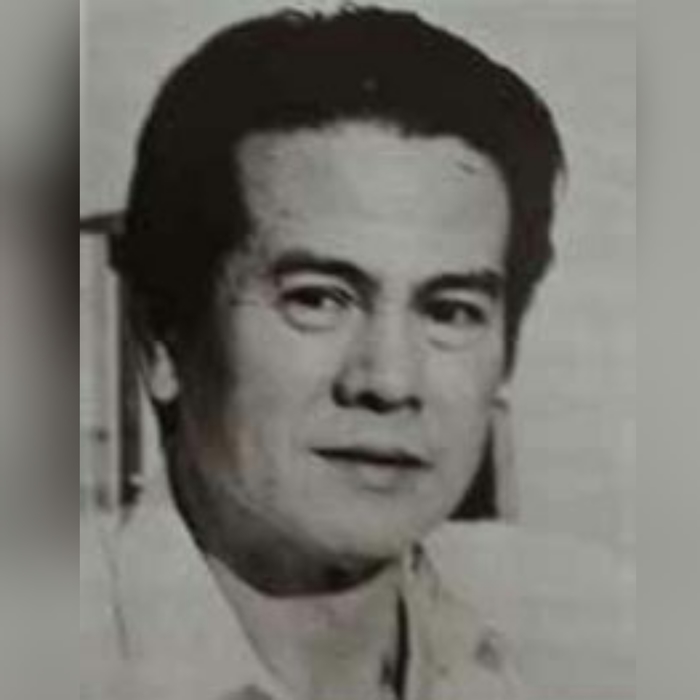
Ramon Muzones (March 20, 1913 - August 17, 1992) was a writer and lawyer and the posthumous recipient of the National Artist of the Philippines for Literature award in the Philippines in 2018. He wrote in Hiligaynon and popularized Hiligaynon literature.
Muzones was born in Iloilo City and was the oldest of ten children of Santiago Muzones and Florentina Larupay. He received his law degree at Central Philippine University in 1952. He wrote 62 novels in the course of his life, the first of which was Tibud nga Bulawan in 1938. He was a founder of an organization for Hiligaynon writers called Sumakwelan
Muzones' Works Include:
- Shri-Bishaya (1969)
- Malala nga Gutom (Malignant Hunger,1965)
- Babae Batuk sa Kalibutan (Woman Against the World,1959)
- Ang Gugma sang Gugma Bayaran (Love with Love Be Paid, 1955)
- Si Tamblot (1948)
- Margosatubig: The Story of Salagunting (1946)
Sources: https://philippinesgraphic.net/national-artists-of-2018/, https://www.panaynews.net/ilonggo-writer-muzones-named-national-artist-for-literature/, https://ncca.gov.ph/about-culture-and-arts/culture-profile/national-artists-of-the-philippines/ramon-muzones/, and https://visayas.politics.com.ph/ilonggo-ramon-muzones-to-be-named-national-artist/


How long have you been a writer?
ReplyDeleteLet's help together.
ReplyDelete